

How Does the Risk You "Just Get By" Today Turn Into Cost Tomorrow?
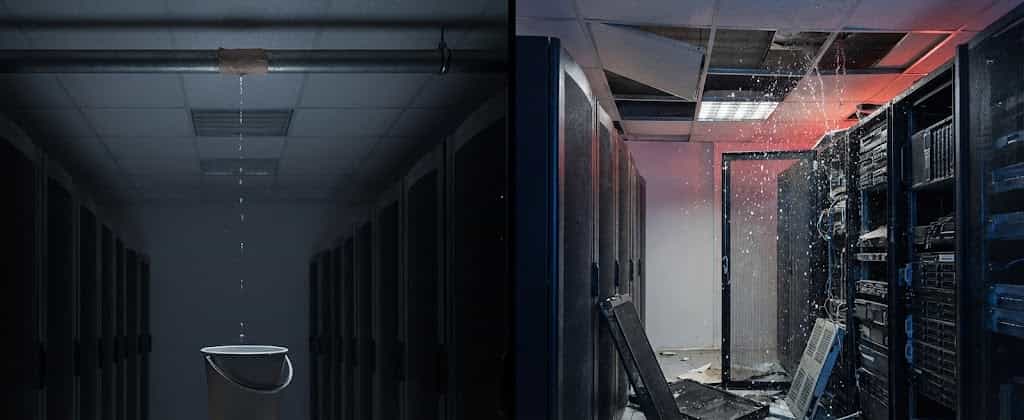
Normalized Risks and the Just Get By Reflex
Perhaps the most common reflex in the occupational health and safety field in Türkiye is the phrase "let's just get by for now." Production pressure, deadline anxiety, staff shortage, postponed maintenance, subcontractor traffic, cost sensitivity... These justifications are repeated so frequently in the field that at some point, risks stop being "problems that need to be managed" and start being perceived as "the nature of the job." This is exactly where OHS's most critical breakdown occurs: risk becomes normalized.
However, risk becomes more dangerous the moment it becomes normalized. Because it's not the existence of risk, but getting used to living with risk that magnifies accidents. A large portion of occupational accidents in Türkiye don't arise from "unknown" risks; they arise from risks that are known but postponed, known but ignored, known but "just gotten by." A non-conformity that seems small today turns into a heavy cost item tomorrow. Moreover, this cost is not just a monetary fine or compensation; it's a chain of destruction that extends from production loss to reputation loss, from judicial processes to depletion of management energy.
This article addresses why "just getting by" OHS practice is common in Türkiye, how risk transforms into cost, and whether it's possible to stop this transformation at an early stage, from the perspective of field reality and regulations.
Loss of Control and Silently Accumulating Debts
"Just getting by" is often misunderstood. Some businesses see just getting by as a form of pragmatism, quick solution generation, or flexibility. However, from an OHS perspective, just getting by means weakness in the control mechanism. Because when risks are postponed in OHS, they don't disappear; they accumulate. Accumulated risk not only increases the probability of an accident but also magnifies the cost that emerges when the accident occurs.
This phrase is heard very often in the field: "It's been like this for years, nothing happened." This phrase provides short-term comfort to the business. But it also carries this meaning: risk is not being controlled, but left to chance. Chance may have prevented the accident until today; but chance is not a system. Without establishing a system, risk produces greater costs over time.
The process of risk transforming into cost usually starts silently. For example, production continues even though the machine guard is missing. Because you don't want to stop. After a while, the operator accepts using that machine without a guard as "normal." Then the new employee does the same job the same way. In this chain, non-conformity is no longer a personal error but becomes a working standard. After this point, when an accident occurs, the problem is not "who made the mistake"; the problem is the question "how did this mistake become standard." This is the point where the cost grows.
Legal and Financial Burdens: After the Accident
When an occupational accident occurs in Türkiye, the burden the business faces is not just a monetary fine. First, production stops or slows down. Management goes into panic mode. Fear of inspection begins. Documents are checked. Employees become uneasy. Workforce loss occurs. The internal energy of the business now flows not to production but to "crisis management."
In Türkiye's practice for occupational accidents, mechanisms such as prosecution processes, expert examinations, judicial reports, and labor inspector reports come into play. The main criterion here is whether the employer has fulfilled their duty of care. Was the risk known? Was it reported? Was action taken? Was closure followed up? Were there recurring risks?
The problem with risks that are "just gotten by" is this: the risk is already known. Most of the time, it has been included in reports, photographed, detected and reported by experts. But it hasn't been followed up. At this point, the cost of risk is not just the accident cost; it's also the legal cost that becomes heavier because the business appears to have "not taken precautions despite knowing." This situation can go beyond the dimension of administrative fines and can weaken the business's position in judicial processes.
Reputation Cost and the Lost Learning Problem
Another dimension of risk transforming into cost in Türkiye is reputation cost. Especially for corporate firms, employee safety is now directly related to supply chain relationships and employer brand. When an accident occurs, the business is affected not only internally but also externally. Subcontractors become hesitant, finding employees becomes difficult, some customers treat suppliers they see as risky more harshly.
Another factor that increases cost in OHS is the "lost learning" problem. When the organization doesn't systematically monitor risks, it repeats the same mistakes. These repetitions produce continuous cost. If a business detects the same non-conformity five times and does nothing; this is not just risk, it's a management cost. Because every repeated non-conformity means expert time, report time, inspection time, field time. This also reduces organizational efficiency.
Conclusion: Establishing Control, Stopping Cost
Risk transforming into cost usually doesn't happen "all at once." It grows slowly. But when the result comes, it comes heavy. This is exactly the reality many businesses experience in Türkiye. They just get by for a long time, then one day the cost explodes. Moreover, when that day comes, simple precautions that could have been taken in the past become more expensive.
For this reason, the real issue in OHS is not risk detection; it's control and continuity. Risk transforming into action, action being closed, repetitions becoming visible, delays coming before management, and the organization creating its own memory... This is the real mechanism that prevents risk from transforming into cost.
EGEROBOT ISG-SIS® is designed to establish this mechanism. The goal is not to make the business faster at document production; it's to make the field counterpart of risks manageable. Connecting non-conformities to actions, clarifying responsibilities, making unclosed tasks visible as delays and repetitions; transforms the "just get by" culture into a sustainable control system. When this transformation occurs, the business is on the side that prevents accidents, not the side waiting for them.
ISG-SIS® Occupational Health and Safety Information System
Don't wait for risk to turn into cost. Control your processes in real-time with ISG-SIS® and secure your corporate memory.
Explore Our ServiceContact Us
To stop 'just getting by' in your business and establish a professional control system, you can request a demo and information from our team.
Demo and Contact