

Why Is OHS Software Not a "Cost" But a Control Tool?
The Expense Item Misconception and True Function
When occupational health and safety investments are discussed in Türkiye, the debate usually revolves around the same axis: cost. "Is such a big expense necessary?", "We already have an OJHS", "The documents are complete", "There are no problems in audits"... These sentences are an indicator that OHS is seen as an expense item, not a management area. For many businesses in the field, OHS is perceived as an obligation that stands next to production, whose direct contribution to production is not visible but must be done. Therefore, the idea of OHS software often comes to the table as an "additional cost."
However, this perspective also explains why OHS in Türkiye runs on paper. Because when a control system is not established, OHS activities turn into document production; and document production is seen not as a favorite investment but as a mandatory expense. However, the real function of OHS is not to produce documents but to control risk. And what uncontrolled risk turns into in Türkiye has been seen multiple times in the field: occupational accident, production stoppage, judicial process, reputation loss, and cost explosion.
Therefore, it's necessary to see OHS software not as a "cost" but as a "control tool." Because software actually makes the organization's risk management measurable. You cannot manage what you cannot measure. And what you cannot manage, you will one day pay as cost. This article analyzes why OHS software in Türkiye is not an expense item but a control investment that strengthens the organization; with field reality and regulatory dimension.
Concrete Cost vs. Uncertain Risk
A significant portion of businesses in Türkiye operates with the reflex of "we'll deal with it if an accident happens" in OHS. This reflex often stems not from bad intentions but from risk being seen as deferrable. Production targets are near, cost calculations are sensitive, human resources are insufficient, maintenance is postponed, actions drag on. In this environment, buying software for OHS seems like an "additional budget."
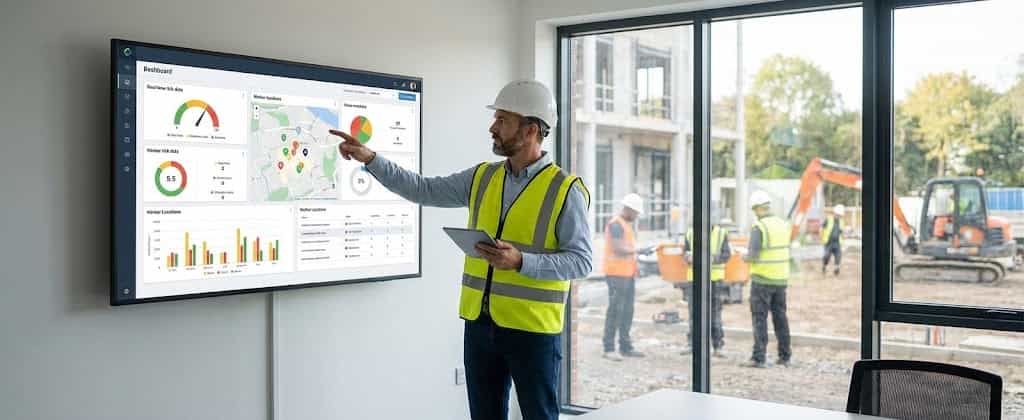
However, the critical mistake here is: the cost of software is seen as concrete while the cost of risk is seen as uncertain. But in Türkiye, the cost of risk is not uncertain; it's just delayed cost. A digital OHS system means: risk detection turning into action, tracking of action, verification of closure, monitoring of repetitions, delays becoming visible, and management seeing decision data in real-time. Without this mechanism, cost grows in OHS. Because risk continues to live in the field.
Invisible Gains and Prevention of Repetitions
OHS software gives the organization control at this point. Control prevents the most expensive thing in OHS: "the repetition of known risk." A large portion of occupational accidents in Türkiye arise from the repetition of the same type of errors. The same machine without a guard, the same unlabeled panel, the same inappropriate working height, the same subcontractor discipline deficiency... Reducing these repetitions is real OHS maturity. And software matures the organization by making these repetitions visible.
Many businesses talk about the cost of software but don't talk about the invisible gains the software brings. For example, when an action tracking mechanism is established; maintenance delays decrease, non-conformity repetitions drop, audit preparation stops being a panic, reports become decision data not archive, OJHS reports have field impact. Each of these directly reduces cost. Because in OHS, cost grows not only in accidents but also in repeated inefficiency.
Financial Dimension: Tax Impact and Predictability
One reason why OHS software is seen as a "cost" in Türkiye is that the tax perspective often doesn't come to the table. However, in corporate businesses, software is usually accounted for as an expense item and can be deducted from the tax base. At this point, although technical details vary by business, the basic logic is clear: the amount paid for OHS software doesn't remain as "every penny being net cost" for the business.
Due to the tax effect, the financial burden actually settles at a different level. Many businesses in Türkiye discuss software as if it's merely a budget item without taking this reality into account. However, when the same business experiences an accident due to lack of control, they cannot "lighten" the price they will pay by deducting it from taxes. The accident produces directly destructive cost. In other words, the cost of software is manageable and predictable; the cost of an accident is out of control.
Data Management as Decision Mechanism
This is what makes OHS software a control tool rather than a cost: it gives the organization visibility. Many businesses in Türkiye cannot see what's happening in the field at management level in real-time. Non-conformities stay in the report, actions drag on, closure is not verified. Management only becomes aware when an audit approaches or an accident occurs.
However, control is seeing in time. When properly set up, software puts field realities before management as data. Data makes management decide. Decision reduces risk. This chain strengthens the business. This perspective is even more critical for businesses working with OJHS. In Türkiye, in the outsource model, OHS can remain limited to archiving reports. Software connects the outsource service to the organization's internal mechanism.
Conclusion and EGEROBOT ISG-SIS® Perspective
Seeing OHS software as a "cost" is one of the most common strategic mistakes made in Türkiye. Because what appears to be a cost is actually the price of control investment. When control investment is not made, risk accumulates and one day emerges as "real cost." Many accidents and major losses that have occurred in Türkiye to date are the result of postponing known risks. This postponement often stems from the weakness of the control system.
EGEROBOT ISG-SIS® has been developed with this understanding. The goal is not to produce documents; it's to transform the organization's risk management into a real control system. Transformation in OHS in Türkiye is possible by "managing by measuring and tracking" instead of "running by just getting by." EGEROBOT ISG-SIS® ensures that safety has a counterpart not only in files but also in the field, by offering system, methodology, and consulting approach together to organizations that want to establish this transformation.
ISG-SIS® Occupational Health and Safety Information System
Discover our ISG-SIS® solutions that make the control costs mentioned in the article manageable and transform your risk into data.
Explore Our ServiceContact Us
To transform your OHS processes from a cost item into a control tool, you can request a demo from our professional team.
Demo and Contact