

Why Can't OHS Professionals Build Systems?
Good Intentions and Structural Barriers
A significant portion of professionals working in the occupational health and safety field in Türkiye carry a well-intentioned goal when they start their profession: to establish order in the business. Systematically managing risks, reducing accidents, making safe behavior permanent in the field, and making OHS part of the corporate culture. This is a correct goal; because this is the true meaning of OHS. However, almost every expert who has worked in the field for a few years constructs the same sentence in different ways: "We can't build a system here."
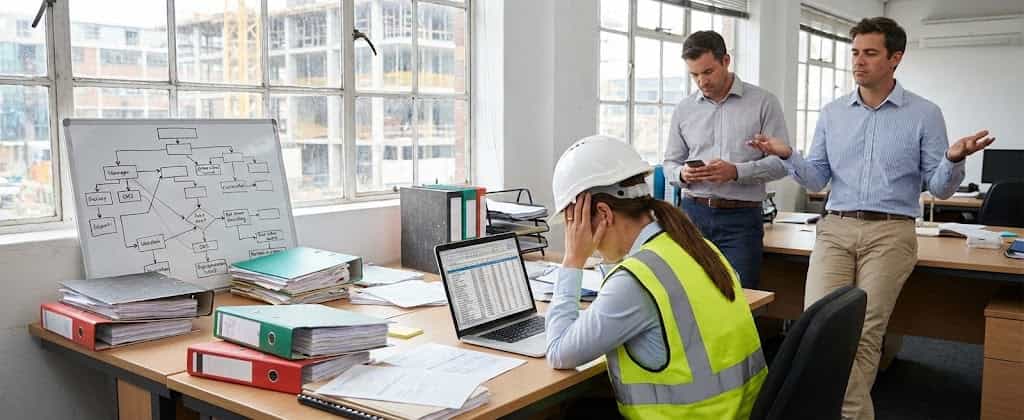
This sentence does not describe experts' lack of knowledge. A significant portion of experts in Türkiye are technically competent; they know the regulations, correctly analyze risks, read the field, and see the danger. The reason they cannot build systems is often not knowledge, but a structural problem. In other words, the OHS professional lacks the authority, time, organizational support, and follow-up mechanism required to build a system. In Türkiye practice, the expert often becomes not "the one who builds the system" but "the one who keeps up with the document," "the one who pulls together the audit," "the one who writes the report when an accident happens."
This article analyzes why OHS professionals in Türkiye cannot build systems; the management, culture, and organizational realities behind this; the effect of the OJHS (Occupational Joint Health and Safety) model; and how the solution passes through a control architecture.
Expertise vs. Authority Discipline
Building a system is a job that requires continuity. Continuity requires four things: authority, time, ownership, and follow-up. The main reason OHS professionals in Türkiye cannot build systems is that these four elements cannot be provided simultaneously.
Let's start with authority. In many businesses in Türkiye, the OHS expert is seen as a technical authority but not as an administrative authority. That is, the expert "can tell the truth" but is not in a position to "enforce the truth." This situation is very clearly experienced in the field. The expert detects the non-conformity, writes it in the report, even warns repeatedly. But if production pressure is heavy, if the maintenance unit is busy, if subcontractor relations are scattered; the expert struggles to ensure the closure of the actions they recommend. Because the closure of actions requires decisions that affect the production order in a business. The expert does not have the authority to make these decisions. Therefore, instead of building a system, the expert becomes the person who keeps the report of the environment where a system cannot be built.
Time Pressure and the Limits of the OJHS Model
The second issue is time. The biggest problem for experts working in the OJHS model in Türkiye is the number of firms served. Many experts in the field have to go to different businesses on the same day. This tempo makes building a system impossible. Because building a system is not "writing a report once a month." Building a system is verifying the closure of previous findings, analyzing recurring risks, monitoring behavioral change, and carrying data to management decisions. None of these processes can be established with short visits. In Türkiye, the OJHS model often turns the expert into a "report producer." This is not the personal fault of these experts; it is the limit of the model.
Outsource Ownership and the Isolated Expert
The third issue is ownership. Because many businesses in Türkiye outsource OHS, internal ownership weakens. The business thinks: "The expert comes, they'll follow up." However, the expert can follow up but the business implements. When there is no internal ownership in the business, the expert remains alone. They convey their warnings but there is no response.
At this point, the expert does not want to have conflict with the employer. Because factors such as livelihood concerns, the need to protect their job, and power balances in the sector come into play. OHS professionals in Türkiye often know very well that if they are labeled as an "expert who pushes too hard," they may lose their job. This situation is more visible especially in the outsource model. In such a climate, a system cannot be built; because the system produces discipline, not conflict, but discipline cannot be established without management support.
Follow-Up Mechanism and Closure Weakness
The fourth element is the follow-up mechanism. This is the most critical point. The real problem of OHS in many businesses in Türkiye is not "detection" but "closure." Non-conformities are correctly detected. In fact, they are detected again and again every month. But they don't close. The expert knows this, writes it again in the report. After a while, the value of the report decreases. Because the report repeats. A repeating report produces the feeling in the business that "the same thing is written every month anyway." This feeling is the moment the system dies. Because the OHS system reduces repetitions; a structure that increases repetitions is not a system.
In the absence of a follow-up mechanism, the expert faces two options: either they constantly write the same non-conformity and "secure themselves on paper," or they "soften" their writing and maintain the relationship with the organization. Many experts in Türkiye are stuck in this dilemma. This entrapment is one of the most important reasons why OHS remains on paper. The expert wants to build a system but the actual parts of the system — decision, investment, discipline — are not in the expert's hands.
Conclusion: From Individual Effort to Organizational System
OHS professionals in Türkiye often cannot build systems; because the authority, time, ownership, and follow-up mechanism required to build a system do not exist simultaneously. The expert has knowledge but is not a decision-maker. They go to the field but cannot ensure continuity. They warn but their enforcement power is limited. They detect but cannot guarantee closure alone. For this reason, the OHS professional can turn from building a system in the field into "the person who keeps the report of systemlessness."
The way to break this cycle is to move OHS from individual effort to organizational control architecture. Connecting risks to actions, clarifying responsibilities, verifying closure, analyzing repetitions, and having management make decisions based on this data; this is the foundation of the system.
EGEROBOT ISG-SIS® empowers the OHS professional at this point. It turns the expert's field findings into trackable actions, makes the responsibility chain visible, brings delays to the management screen, and reveals recurring risks as trends. Thus, the expert becomes not just "the one who writes" but "the one who operates the system." Making OHS sustainable in Türkiye is possible by not leaving experts alone.
ISG-SIS® Occupational Health and Safety Information System
Transform your experts' field efforts into a real system. Explore our ISG-SIS® solutions that provide action tracking and control power.
Explore Our ServiceContact Us
To empower OHS professionals with system-building authority and follow-up mechanisms, you can request a demo from our professional team.
Demo and Contact