

Why Does OHS Run on Paper in Türkiye?
The Invisible Wall Between Paper and Field
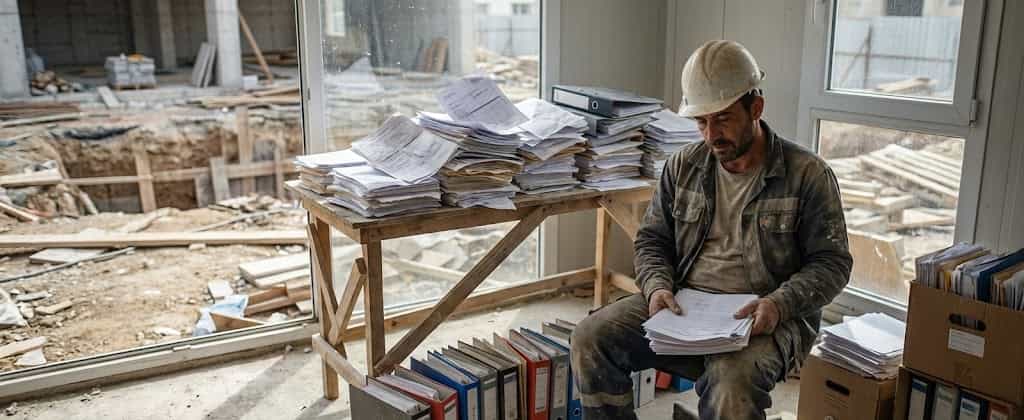
There is a truth that everyone working in occupational health and safety in Türkiye learns very early: There is an invisible wall separating paper from the field. In the files, everything is complete; there is a risk assessment, there are training records, there is an emergency plan, there are instructions, there are committee minutes, there are forms. However, when you go to the field, you encounter a different reality: the same non-conformities repeat, the same risks continue, the same actions don't close, the same behaviors don't change. The difference between these two realities is the clearest indicator explaining why OHS "runs on paper" in Türkiye.
This situation is often explained as "regulations are heavy." However, the issue is not the weight of regulations; it's how regulations are perceived in the business. In many businesses, OHS is positioned as a secondary burden alongside production and operations. This positioning turns OHS from being a system-building area into a "fulfilling obligation" area. Once the obligation is fulfilled, the goal becomes completing the file, not reducing risk. Thus, OHS becomes perfect on paper; but fragile in the field.
This article analyzes why OHS remains on paper in Türkiye not just with general definitions; but through habits in the field, internal corporate culture, the OJHS model, audit psychology, and the real dynamics of working life. Because OHS remaining on paper is not a technical problem; it's a management problem.
Purpose vs. Tool: Confusion of Success Criteria
The first reason OHS remains on paper is that OHS is seen as a "tool" not a "purpose." Many businesses in Türkiye don't put OHS at the same table as production targets. OHS is not treated as a production parameter. Consequently, the success criterion of OHS also changes. Success becomes not reducing accidents; but not having problems during inspections, completing documents, and maintaining "appearance." This approach contradicts the nature of OHS. Because OHS's test is not in the audit but in the ordinary day in the field.
The second biggest factor keeping OHS practices on paper in Türkiye is "audit-focus." When an audit approaches, the business becomes active, paperwork is gathered, deficiencies are temporarily corrected. When the audit passes, relaxation begins. This fluctuation is an indicator that a system is not working. Because a system doesn't fluctuate. A system is continuous. In many businesses in Türkiye, OHS fluctuates. This fluctuation enlarges paperwork, shrinks the field.
The Issue of Ownership and Decision Mechanism
The third reason is the uncertainty of real ownership of OHS in the business. On paper, ownership exists: a responsible person is assigned, an expert is appointed, a physician comes. But real ownership in the field is in the decision-making mechanism. Taking action in OHS often requires budget, planning, and production order. If a machine guard is to be installed, production may stop. If a maintenance plan is to be made, shift order may change. If chemical storage standards are to change, the logistics process may be affected. These start with the expert's report but end with management's decision. If management decision doesn't come, the report remains on paper. This is why in Türkiye, OHS files grow but risks in the field don't shrink.
The fourth reason is the practical limits of the OJHS model. The outsource service model enabled OHS to become widespread in Türkiye. However, the same model also caused OHS to cease being "the business's work" in some businesses. The business started seeing OHS as a service received from outside. This perspective naturally produces: "The expert comes, writes a report, done." However, writing a report is the beginning of OHS. The continuation is the closure of actions. If the OJHS report doesn't turn into action closure, the process remains on paper.
Production Tempo and Postponed Risks
The fifth reason is production tempo, the most dominant reality of working life in Türkiye. Production targets often take precedence over OHS. This stems not only from the boss's attitude; but also from market pressure. Orders need to be delivered, there are deadlines, customer pressure, competition. In this environment, OHS is postponed saying "not now." Postponed risks accumulate. Accumulated risks are recorded but not prevented. Because records are kept, the business also thinks "we're doing OHS." This is the most typical example of OHS on paper: there's record, there's no control.
The sixth reason is the weak management of OHS's behavioral dimension. Many businesses in Türkiye provide training, get signatures, put them in files. But behavioral change is not monitored. Training becomes a formality, not part of a system. Workers in the field act with real production pressure. The supervisor says "be fast." The foreman says "we do it this way." The subcontractor says "just finish the job." In this environment, OHS behavior doesn't become permanent. Behavior that doesn't become permanent remains on paper.
Control Mechanism and Discipline
The seventh reason is the absence of a tracking mechanism. The real problem of OHS in Türkiye is not "detection" but "closure." Non-conformities are detected. Detected repeatedly. But they don't close. The same non-conformities repeat in every report. This repetition shows the system is not working. Records increase on paper but since risk doesn't decrease in the field, there's no real improvement. The business talks about the same things, writes the same things for years but continues living with the same risks.
At this point, the real reason OHS remains on paper becomes clearer: the control mechanism has not been established. The control mechanism is transforming risk into action and closing action. If the action's responsible person is clear, if the date is clear, if delay is visible, if repetition is tracked; paper descends to the field. The reason paper doesn't descend to the field in Türkiye is the lack of this mechanism.
Conclusion and EGEROBOT ISG-SIS® Perspective
The main reason OHS runs on paper in Türkiye is not regulation; it's that OHS is positioned in the business as "obligation" not "system." Audit-focus, misperception of the OJHS model, production pressure, lack of management ownership, and absence of tracking mechanism; squeezes OHS into documents. This compression doesn't reduce risks in the field. If risk doesn't decrease, OHS continuously lives the same cycle: paperwork grows, reality doesn't change.
EGEROBOT ISG-SIS® is a system developed for this transformation. The goal is not to grow the institution's files; but to grow the institution's control capacity. It establishes a structure that connects OJHS reports to actions in the field, makes delays visible, keeps corporate memory inside the business, and forces management to make data-based decisions. Thus, OHS moves beyond being "paperwork"; it transforms into the business's sustainable safety and management discipline.
ISG-SIS® Occupational Health and Safety Information System
Bring OHS processes down from paper to the field. Meet our ISG-SIS® solutions that establish real control and tracking discipline.
Explore Our ServiceContact Us
Request support from our team to transform OHS processes that remain on paper in your business into a real management system.
Demo and Contact